New behavior
Define an experience for discovering, selecting and ordering food for delivery.
Leading the design of a new food-delivery experience as 7-Eleven expanded into a category dominated by established delivery platforms.
7-Eleven wanted to create a new food-delivery experience and compete in a market shaped by services such as Uber Eats and DoorDash. The challenge was to introduce a new behavior while still feeling like part of the existing 7-Eleven product ecosystem.
Define an experience for discovering, selecting and ordering food for delivery.
Meet interaction expectations already established by leading delivery products.
Extend the 7-Eleven brand into delivery without losing the convenience customers already associate with it.
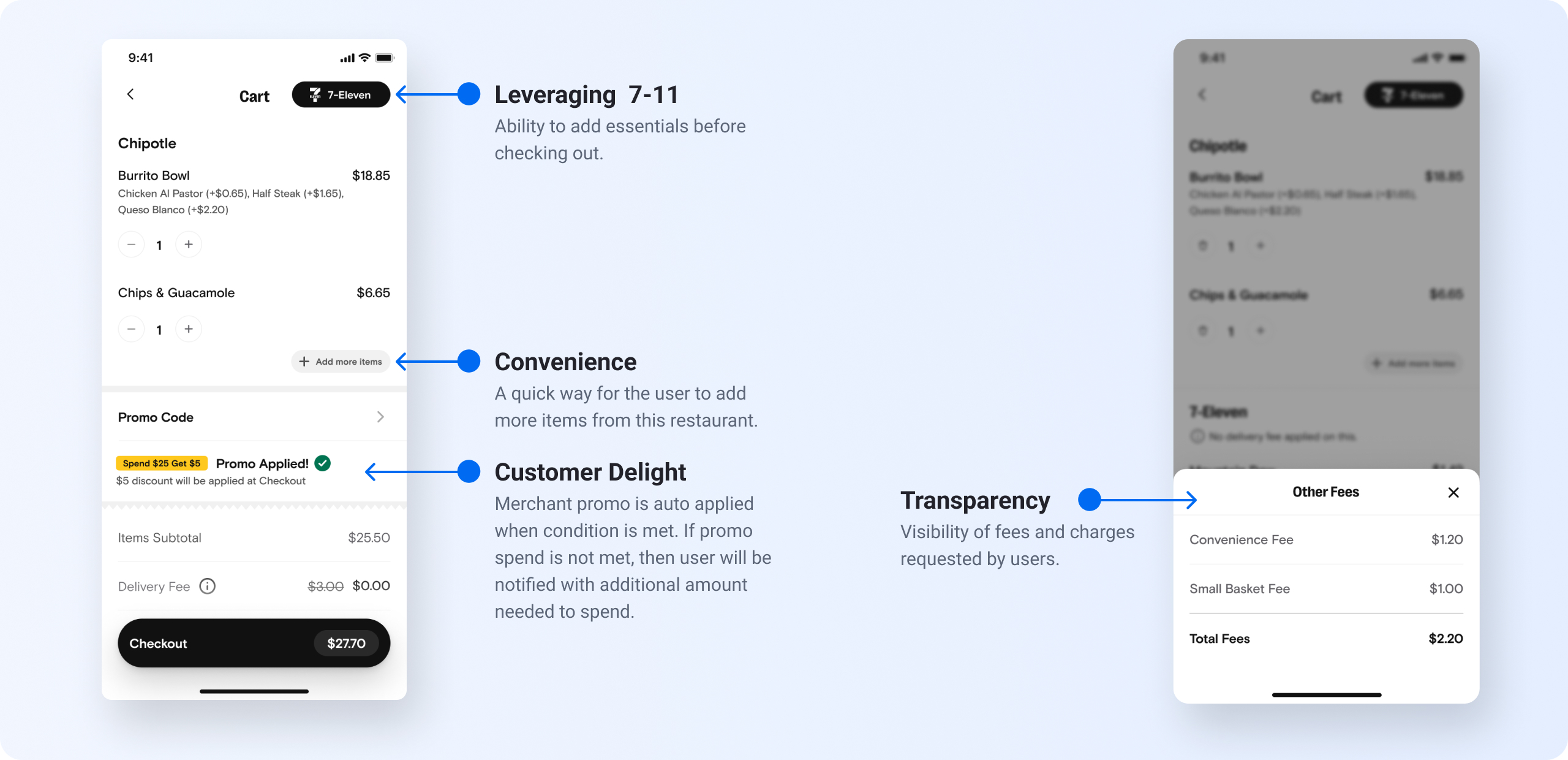
The case study can focus on the moments that mattered most: entry into delivery, browsing and selection, cart and fulfillment choices, checkout, and order status.
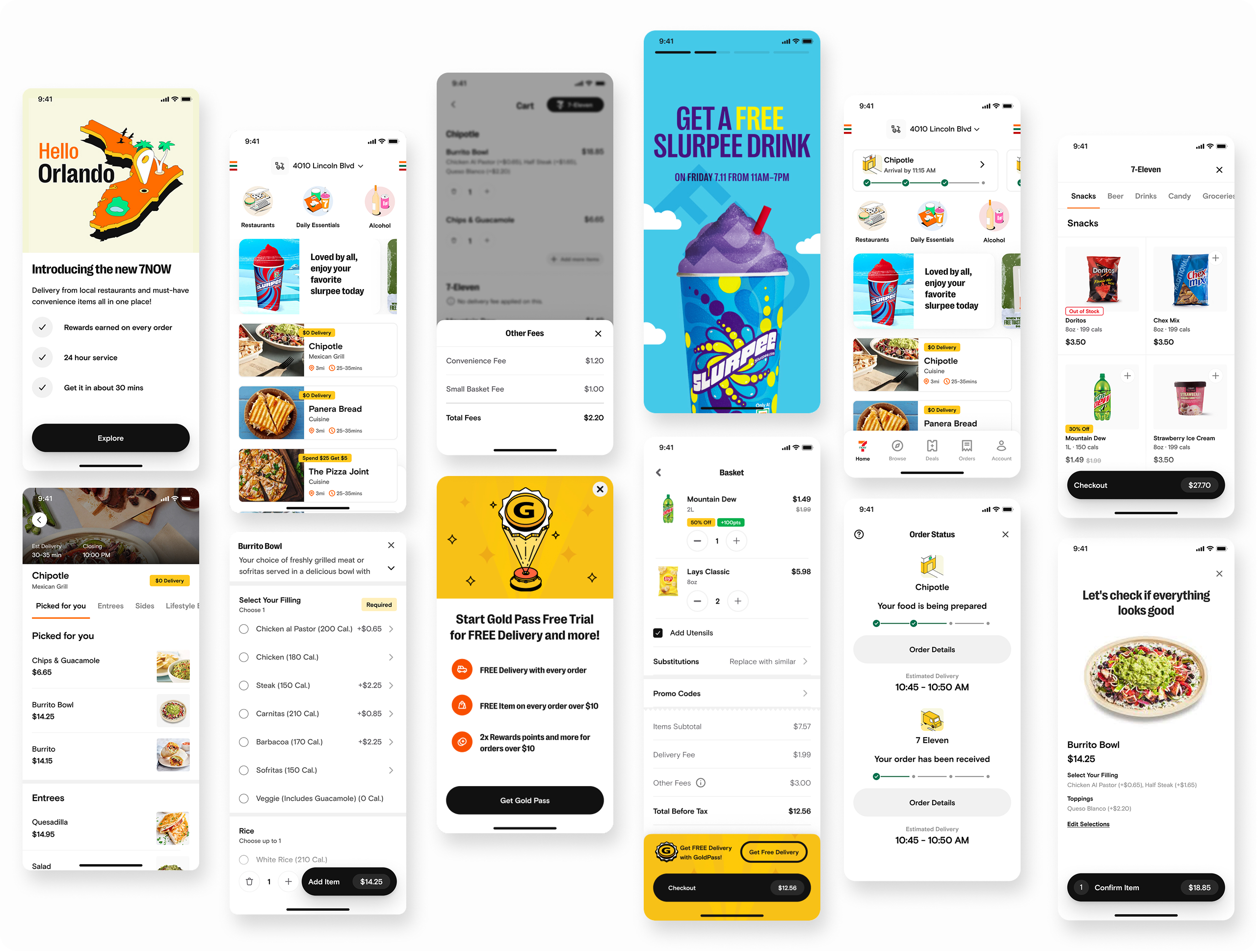
As design lead for the feature, I helped shape the experience from product direction through interaction and UI design, balancing a new business opportunity with familiar consumer patterns.
The work demonstrates consumer product leadership: introducing a new capability, learning from established market conventions, and integrating it into an existing brand and app experience.
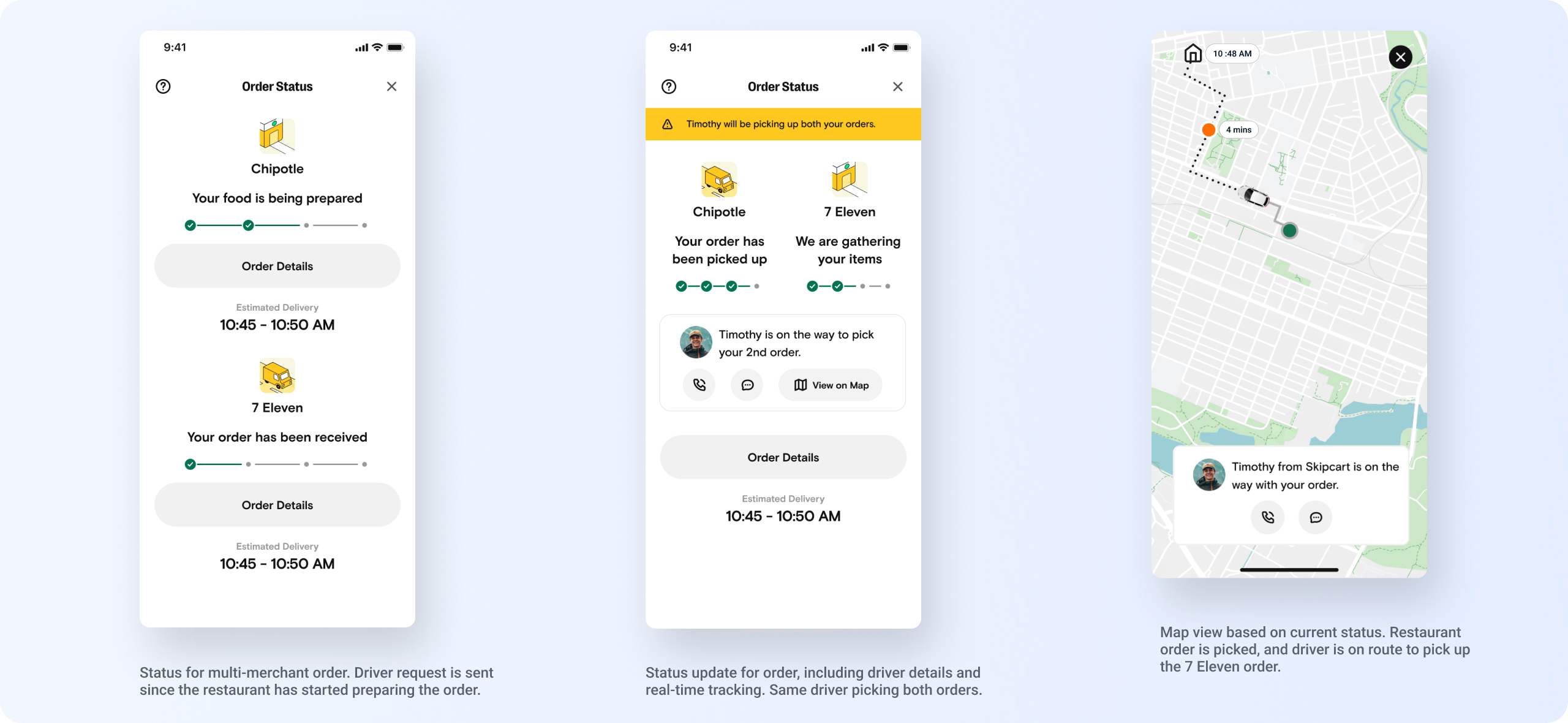
The customer journey was only one side of the new delivery venture. We also explored how the driver experience could make delivery more efficient by allowing a driver to pick up two customer orders from two different locations when those locations fell within an acceptable radius of each other. The design problem was to make a more efficient route possible without creating confusion about pickup order, timing, or which items belonged to which customer.
Identify when two pickup locations are close enough to make a combined route practical.
Make the order of pickups and deliveries easy for the driver to understand at a glance.
Keep each customer’s items, status and handoff clearly differentiated throughout the route.