Clinician-first
Organize the platform around clinical work and decisions rather than around the structure of a generic EHR.
Reimagining the clinician experience beyond the traditional EHR.
The project is still in its vision stage. The goal is to understand what a custom Hanger clinical platform should enable before translating the current NextGen experience screen-for-screen. That means looking across the clinician’s day, patient care, device workflows, operational responsibilities and the information needed to make decisions.
Organize the platform around clinical work and decisions rather than around the structure of a generic EHR.
Treat patient care and device delivery as one connected experience instead of separate systems and handoffs.
Create a foundation that can support future capabilities, including AI-enabled decision support.
Hanger currently relies on a third-party EHR. This vision explores what becomes possible when the organization owns a platform designed specifically around prosthetic and orthotic care — connecting clinical work, device workflows and operational context.
Move beyond the constraints of a generic third-party EHR toward workflows designed for Hanger clinicians.
Bring appointments, evaluations, measurements, configuration, fabrication, fitting, delivery and follow-up into a more coherent experience.
Use contextual intelligence and AI to help clinicians understand relevant information and make informed decisions.
The clinic overview brings together today’s schedule, the patient/device pipeline, tasks, activity and alerts so clinicians and administrators can orient themselves quickly and decide where to focus.
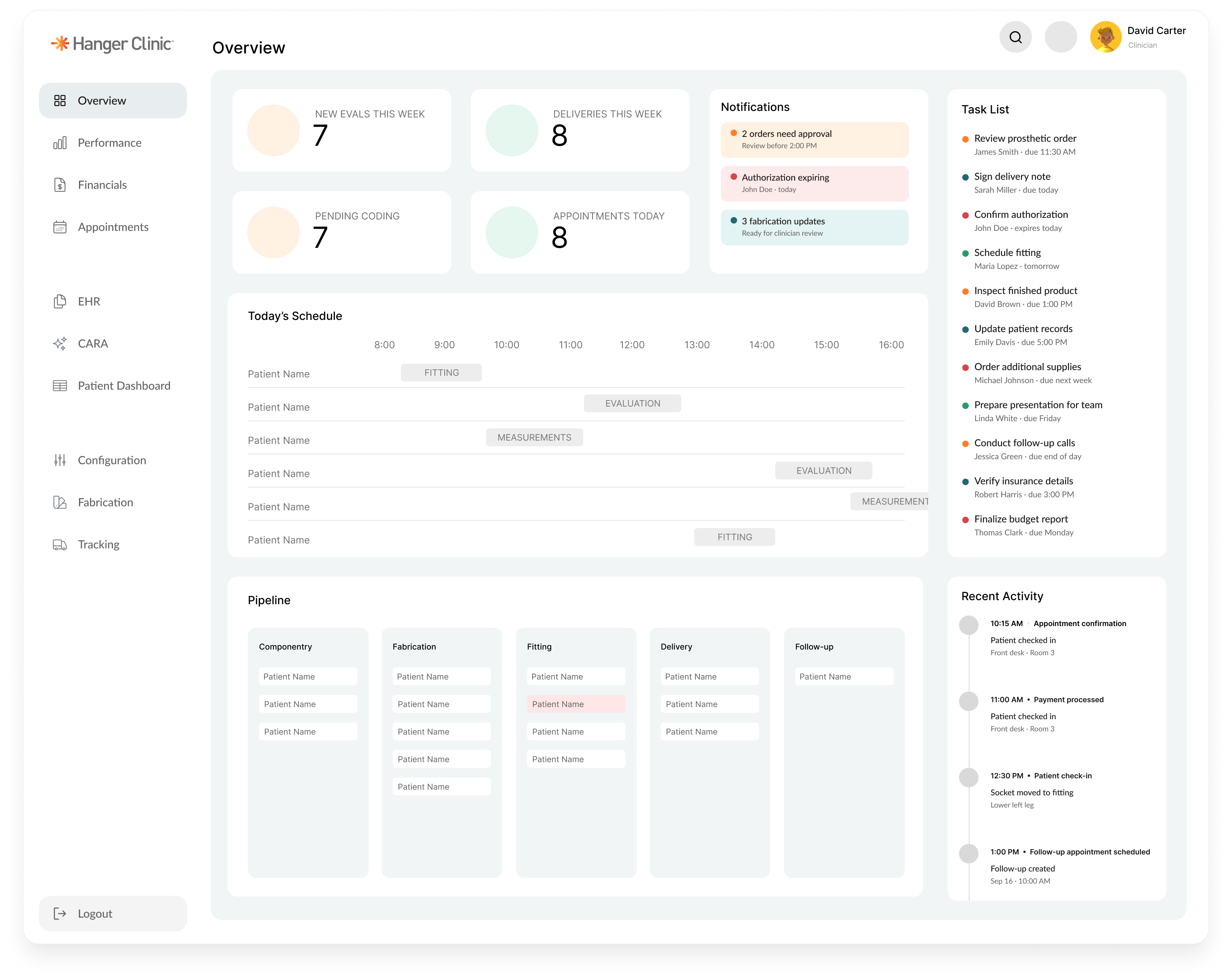
The platform vision extends beyond a dashboard into patient and clinical workflows, creating the foundation for a first-party experience that can evolve around Hanger’s specific care model.
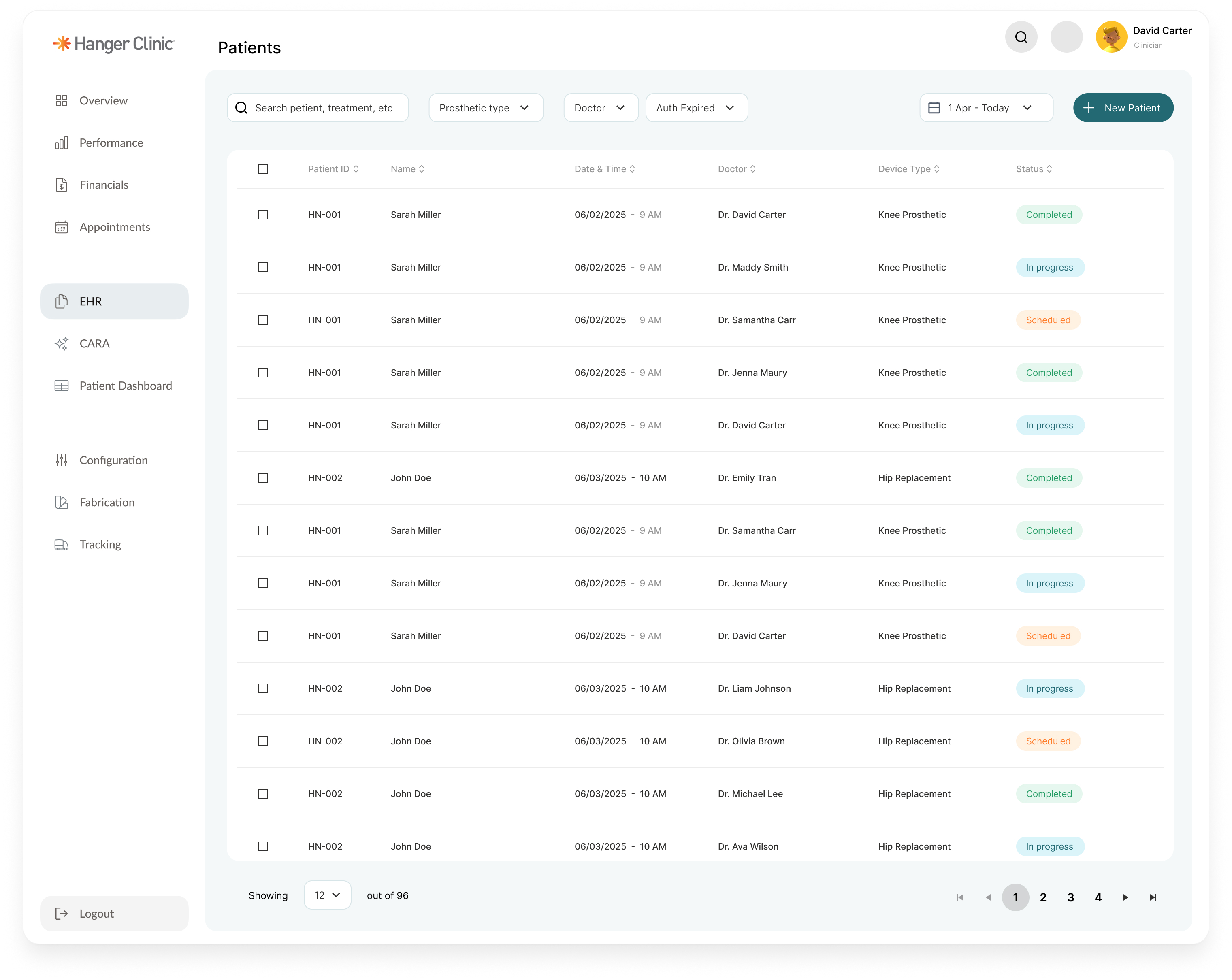
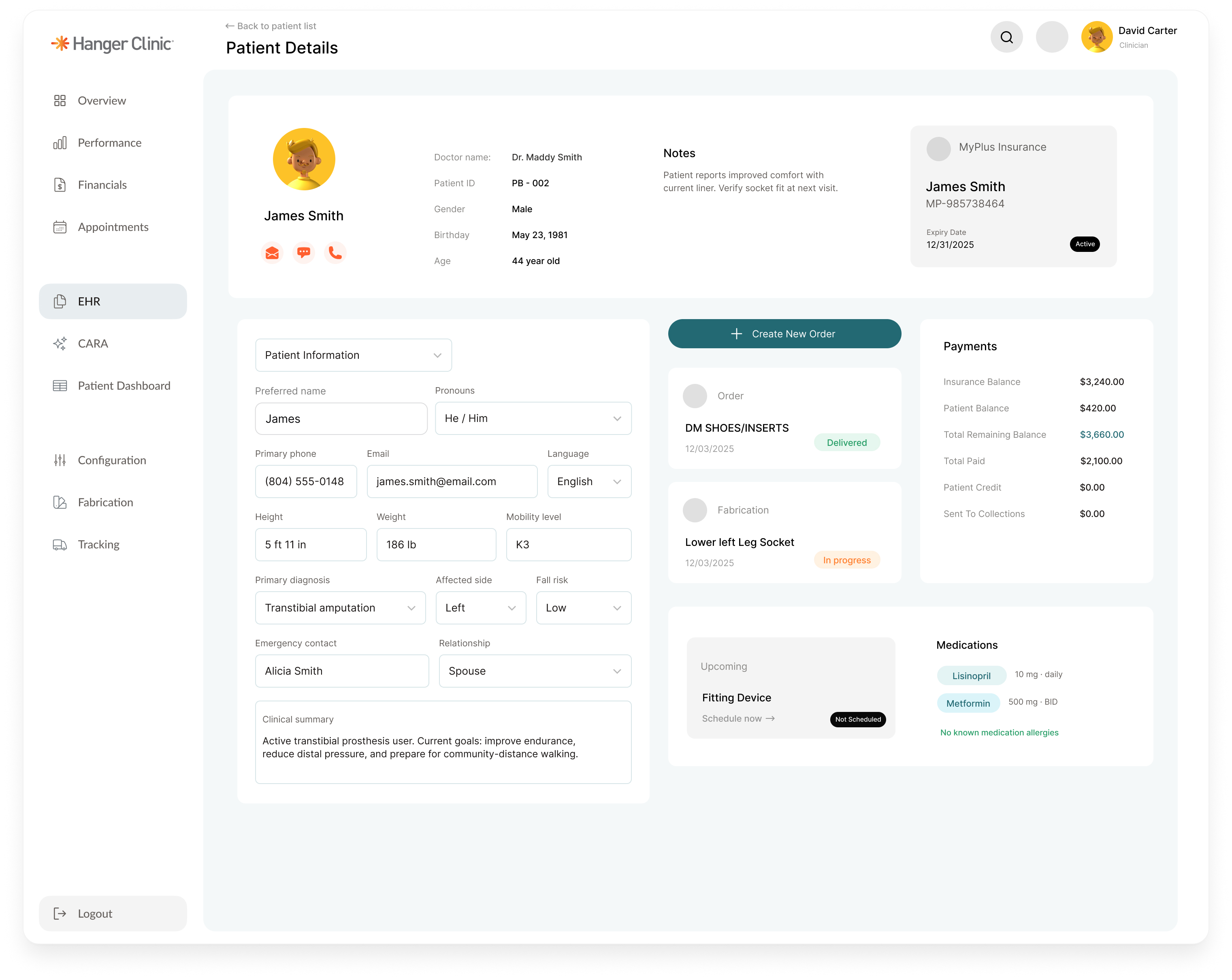
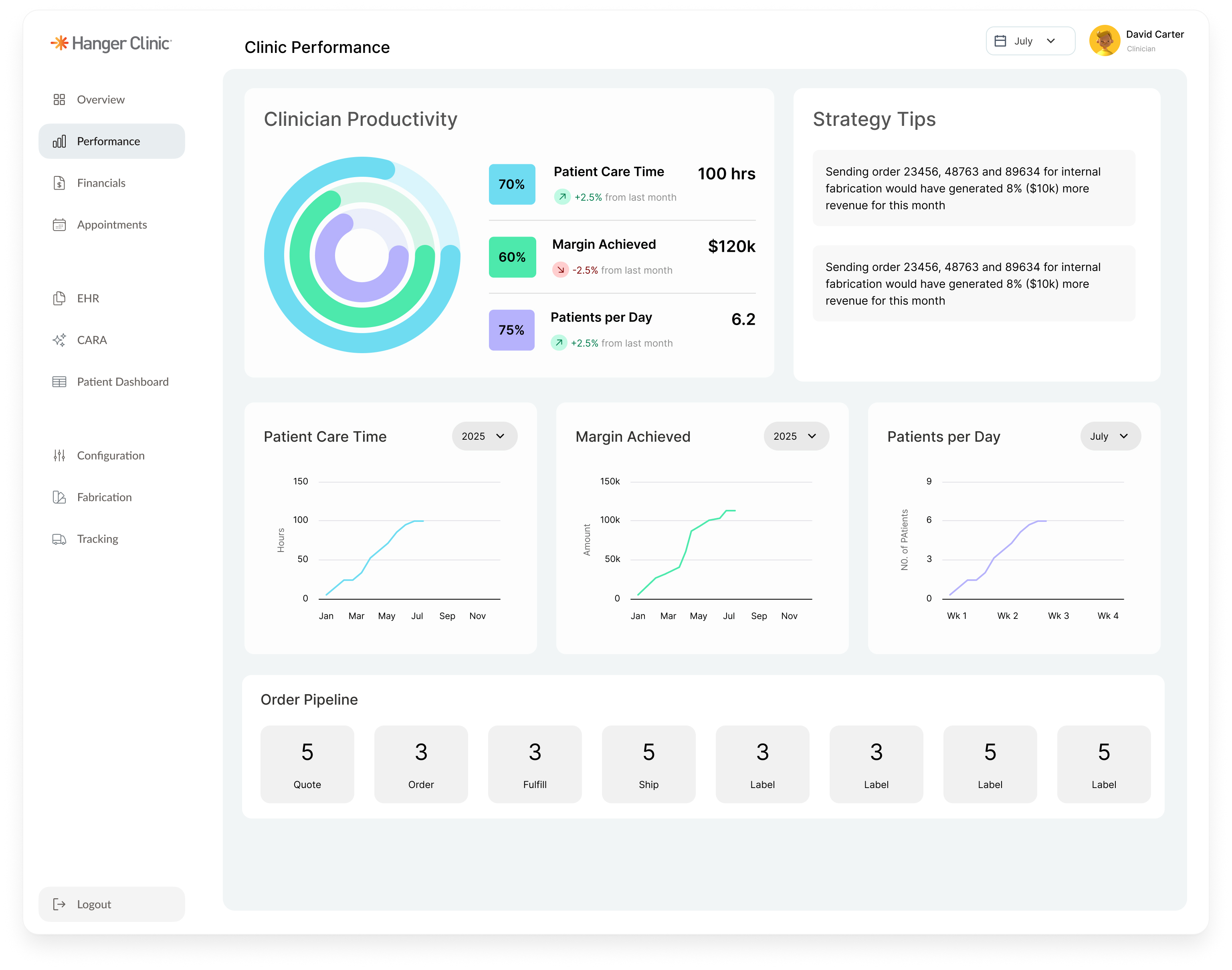
Concepts explore patient-care time, patients per day, margin and order pipeline visibility. The longer-term opportunity is to move beyond reporting toward contextual guidance that helps teams understand what is changing and where attention may be needed.
AI is being considered as part of the product model rather than as a separate assistant bolted onto the interface. The most promising opportunities are moments where clinicians need to understand why something requires attention, reconcile information, review complex patient context, or make a decision with several contributing factors.
Updated device arrival date creates a fitting conflict.
Identify affected patients and available alternatives.
Review recommended fitting dates before changes.
After approval, update the visit and notify the patient.
Recommend appointments based on clinical needs and capacity.
Suggest ways to fill openings and reduce unused slots.
Surface patient context and clinical considerations.
Flag affected fittings and propose schedule adjustments.
The opportunity is not a generic chatbot. AI can surface relevant context, identify incomplete or conflicting information, explain why something deserves attention, summarize complex patient or operational information, and support clinical decision-making while keeping the clinician in control.